 IBIZA.EROTICA
Dark Eros
How can humiliation, degradation, pain and the loss of control become sources of erotic pleasure?
How can an apparently cruel experience coexist with profound tenderness, intimacy and mutual trust?
And how can the intensity of a BDSM experience lead some people into a state of deep mental stillness known as subspace?
Perhaps one of the most fascinating dimensions of human eroticism lies precisely in the coexistence of opposites.
In humiliation, shame can become a source of pleasure. In degradation, the symbolic loss of one’s status can be experienced as a form of liberation. In primal play, we temporarily abandon social conventions to explore a more instinctive, animalistic dimension of our nature.
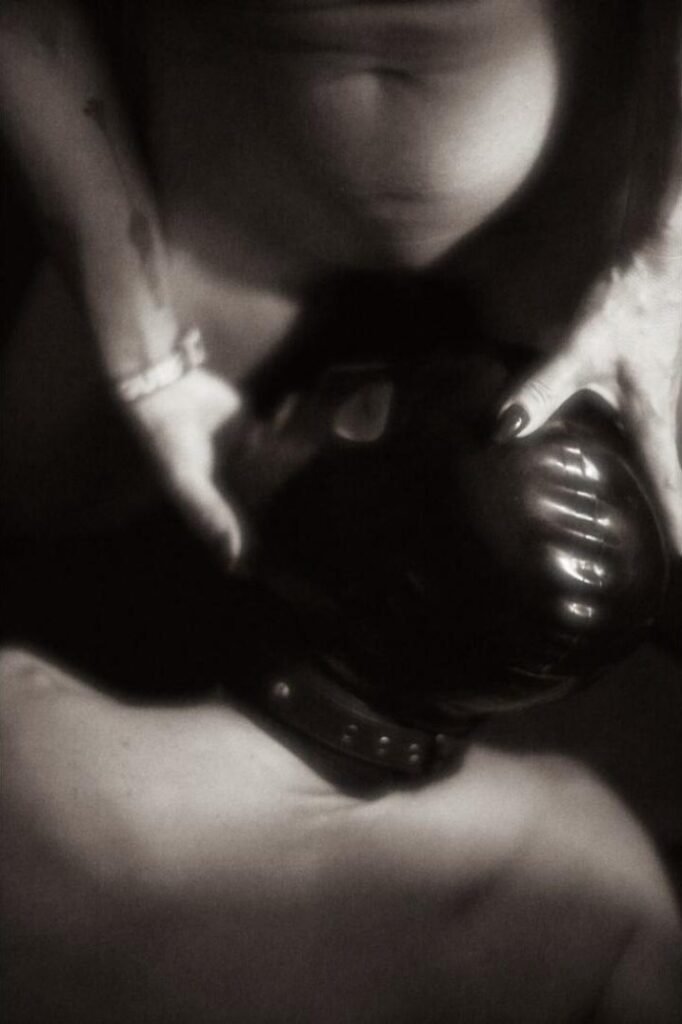
How much of our erotic desire stems from the need to escape the constant expectation of being respectable, strong, independent, rational or morally impeccable?
Perhaps, for a moment, we simply desire the freedom of not having to be someone.
The Freedom to Abandon the Mask

Carl Gustav Jung called the social mask through which we present ourselves to the world the Persona, and the aspects of our personality that we repress, reject or struggle to acknowledge the Shadow.
The shadow does not necessarily contain something negative, but also aspects of our nature that find no space within the identity we have constructed.
Certain expressions of eroticism can represent a temporary liberation from this identity.
The Fascination of Transgression
In his book Erotism, Georges Bataille explores the profound relationship between desire, prohibition, sacredness and transgression.
What society teaches us to consider unacceptable can acquire a particular erotic intensity precisely because it is forbidden.
We can intimately desire something that, outside a consensual erotic space, we would deeply reject.
However, I don’t believe we necessarily need to trace the origins of these fantasies back to childhood trauma or psychological wounds. That would be reductive.
Desire can also arise from curiosity, play, the pursuit of intensity or the possibility of experiencing something radically different from our everyday identity.
Subspace: Beyond Control

Subspace is a subjective altered state of consciousness that some people experience during intense BDSM encounters.
It can involve an altered perception of time, the suspension of inner dialogue, feelings of euphoria, detachment or profound mental stillness.
I find the parallels with certain meditative and tantric states particularly fascinating, while recognising that these are different experiences.
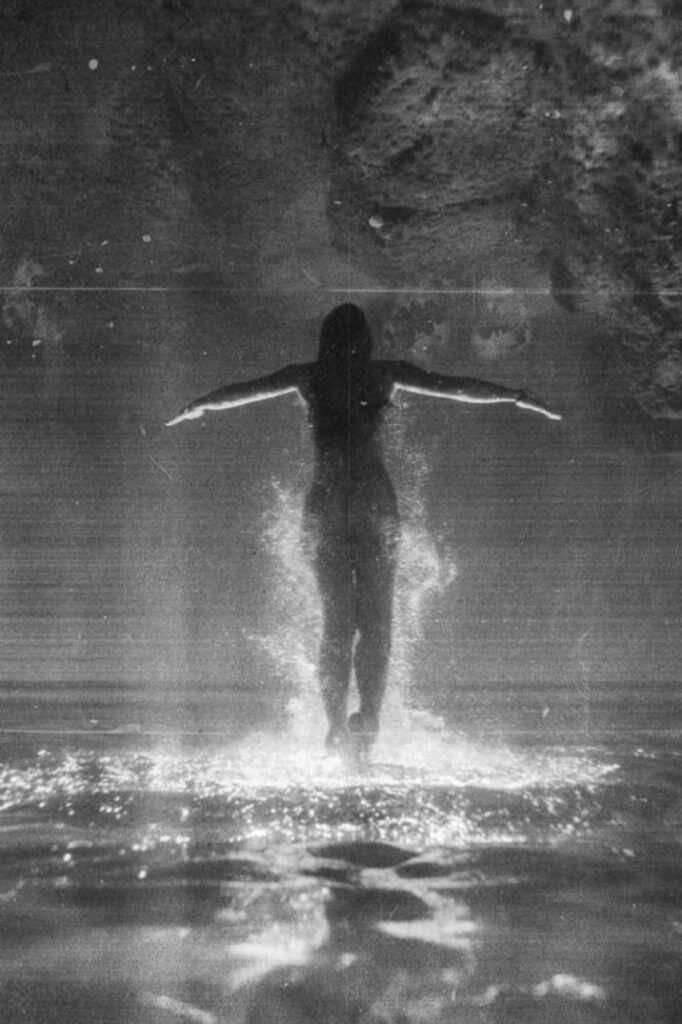
Through an apparently extreme erotic experience, some people can encounter a profound sense of peace, freedom and connection.
Yet this very state of vulnerability, in which communicating one’s needs and recognising one’s limits may become more difficult, makes responsibility, attentiveness, consent and aftercare even more essential.
The Tenderness of Darkness
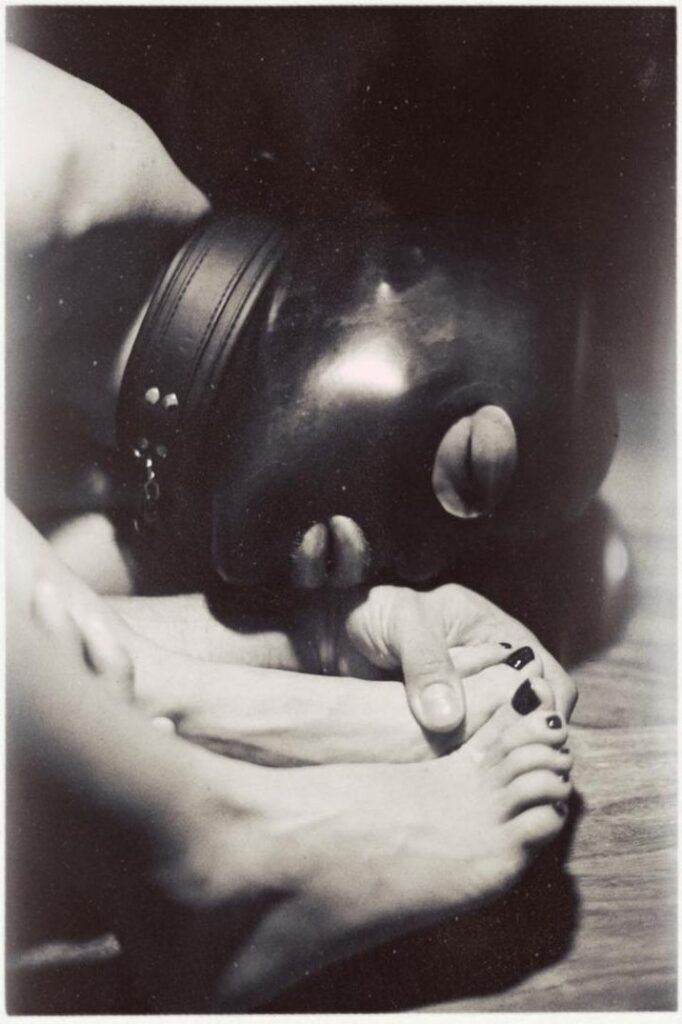
Perhaps the most fascinating paradox of Dark Eros is that some of its most intense expressions can require an extraordinary capacity for empathy, care, attentiveness and intimacy.
How respected do we need to feel to explore consensual humiliation?
How deeply do we need to trust someone to allow ourselves to relinquish control?
How accepted do we need to feel to reveal those parts of ourselves that we fear might be judged?
There is a profound difference between being stripped of one’s dignity and freely choosing to play with its symbolic loss within a consensual space.
Erotic degradation does not necessarily imply an absence of respect, just as domination does not necessarily imply an absence of empathy.
Intimacy does not manifest itself exclusively through gentleness. It can also emerge through the ability to embrace another person’s vulnerability, listen to their most difficult desires and respect their boundaries.
Behind an experience that may appear cruel from the outside, there can be profound intimacy between the people involved.
Erotic darkness is not necessarily the opposite of tenderness. Sometimes, it is precisely tenderness that allows us to encounter our darkness.
Integrating the Shadow

Certain tantric traditions invite us to question the separation between the pure and the impure, light and darkness, without abandoning ethical responsibility.
Erotic emancipation does not necessarily mean fulfilling every fantasy, but having the freedom to recognise, understand and observe it without shame.
The freedom to desire is not the freedom to act without limits. Consent, mutual respect and the ability to stop an experience remain essential.
We can explore our shadow without abandoning our ethics.
And perhaps true erotic freedom lies not in eliminating our darkness, but in learning to encounter it without shame, without fear and without becoming enslaved by it.
The Art of Erotic Freedom
Male Erotic Emancipation
After publishing my article on the objectification of men, I found myself reading dozens of personal accounts from men describing their relationship with desire, vulnerability and the constant pressure to prove their worth.
What struck me was not so much their desire to be more sexually free, but their desire to be freed from something.
From the need to perform, to satisfy, to take the initiative, to always be ready, confident, desirable and able to live up to expectations.
This led me to reflect on an aspect of sexual liberation that perhaps we still talk too little about: male erotic emancipation.
We have talked a great deal about how men need to learn to respect the sexual freedom of others. But how much have we talked about their ability to discover their own?

What does it mean, today, to be an erotically emancipated man?
Does it mean being able to experience one’s sexuality without taboos, or does it mean, on a deeper level, freeing oneself from the need to prove one’s masculinity through it?
Perhaps male erotic emancipation is not about gaining new freedoms, but about letting go of the expectations we have internalised.
The freedom to desire without feeling entitled, to take the initiative without feeling obliged to, to accept rejection without experiencing it as a threat to one’s identity.

The freedom to receive pleasure without feeling indebted, to be vulnerable without shame, to surrender without feeling defeated.
But also the freedom not to feel desire, not to be constantly sexually available, and to say no without having to justify one’s masculinity.
An erotically emancipated man does not see his partner’s pleasure as his sole responsibility, but as something to explore together. He does not always have to lead the experience; he can also allow himself to be surprised.
Intimacy thus becomes a safe, non-judgmental space where both partners can express themselves authentically, and where desire can evolve, change direction and take forms they may never have imagined.
Perhaps this is where eroticism becomes a creative experience rather than the repetition of a script.
Why are straight cis men perceived as the enemy?
Even before publishing this article, the question itself sparked opposing reactions in the comments on my FetLife poll.
Some argued that it was unfair to generalise, expressing their love for straight cis men and pointing out that there are many wonderful men out there. Others responded with anger, linking the question to patriarchal power, violence and the abuse of power. Someone even suggested that the title itself was contributing to further division.
And that is precisely where I want to begin.
In a community dedicated to sexual freedom, the exploration of desire and the culture of consent, a significant proportion of unwanted interactions seem, in my experience, to come from straight cis men.
Unsolicited genital pictures, sexually explicit messages, persistent advances and difficulty accepting rejection.
The freedom to express one’s sexuality is sometimes confused with the right to impose it on others.
But where does this attitude come from?

In Masculinities, sociologist Raewyn Connell explores the concept of hegemonic masculinity, a cultural model that legitimises certain gender hierarchies. Meanwhile, bell hooks, in The Will to Change, examines how patriarchal culture can also restrict men’s emotional freedom and their ability to acknowledge their own vulnerability.
Perhaps many men have learned how to express their desire without truly learning how to relate to the desires of others.
The distrust directed towards them does not necessarily arise out of nowhere. It can be the result of repeated experiences and represent an understandable form of self-protection.
In The Cultural Politics of Emotion, Sara Ahmed explores how emotions circulate socially, shaping collective identities and establishing boundaries between groups.
But what happens when distrust towards certain behaviours becomes a preconceived judgement about someone’s identity?
The question, then, is not whether straight cis men are the enemy, but how the figure of the enemy is constructed.

We must distinguish responsibility from guilt, privilege from individual behaviour, and criticism of patriarchy from hostility towards men themselves.
Acknowledging one’s privilege does not mean accepting guilt simply for who one is. It means becoming aware of the cultural structures within which one has been shaped and taking responsibility for one’s actions.
At the same time, no one should feel obliged to abandon their personal boundaries in order to demonstrate their inclusivity.
In The Ethics of Ambiguity, Simone de Beauvoir develops a philosophical perspective in which our own freedom is deeply intertwined with the recognition of the freedom of others.
Perhaps a new form of male erotic emancipation begins precisely here: with the ability to desire without entitlement, to express oneself without imposing, and to accept rejection without experiencing it as a diminishment of one’s own worth.
Sexual liberation is not merely the freedom to express our desires, but also the respect for another person’s freedom not to share them.
Can we hold men accountable without turning their identity into a fault? And can we truly dismantle prejudice by creating new forms of it?
The Objectification of Men: Between Desire and Performance
From heterosexual and gay pornography to everyday intimacy, a man’s erotic value is often associated with his ability to perform.
Susan Bordo, in The Male Body, explores the male body as an object of the gaze and of cultural expectations, while bell hooks, in The Will to Change, examines how traditional models of masculinity can prevent men from acknowledging their own vulnerability.
But what happens when these expectations become so deeply internalized that they become indistinguishable from our own desires?

The use of erectile dysfunction medication and, in some cases, injections — while valuable therapeutic tools — raises a cultural question when used to enhance sexual performance: how free is a man to experience his sexuality according to the natural rhythms of his own body?
An erection is expected to be immediate, firm, and long-lasting. Desire must always be available. Fatigue, hesitation, and fluctuations in arousal risk being perceived as failures.

The male body thus becomes a machine to be optimized rather than a sensitive organism to be listened to.
This is where male self-objectification emerges: men internalize cultural expectations and begin to observe, judge, and evaluate their bodies from the outside, rather than experiencing pleasure from within.

In her essay Objectification, philosopher Martha Nussbaum identifies instrumentalization and the denial of subjectivity as two forms of objectification.
And yet, there is an apparent paradox. Within consensual BDSM dynamics, choosing to become an object of desire can represent a form of liberation from the responsibility to perform.

Perhaps one of the deepest forms of male erotic freedom lies in feeling desired without having anything to prove.
How much of what a man believes he desires comes from his authentic feelings, and how much from the need to reaffirm his masculinity?
Ultimately, how interested are we in a man’s pleasure, and how much are we interested in his ability to give us pleasure?
Seduction vs. Manipulation
Have you ever wondered where seduction ends and manipulation begins?
A lingering glance. A carefully chosen compliment. A little mystery. The pleasure of making someone curious about us.
These can all be part of seduction.
But what happens when attraction becomes a strategy to control someone else’s feelings, choices, or behaviour?
Is seduction about awakening desire, or creating a desire we can use to get what we want?
The Art of Attraction

Seduction is often associated with charm, beauty, confidence, and mystery.
But genuine seduction doesn’t necessarily require a strategy.
Sometimes it’s simply the chemistry between two people, a conversation that unexpectedly becomes intimate, or the excitement of discovering someone who fascinates us.
French philosopher Simone de Beauvoir explored the importance of recognizing others as free individuals rather than reducing them to objects of our desires.
Her philosophy offers an interesting way to understand seduction.
To seduce someone is to invite their desire, not to take possession of their freedom.
When Attraction Becomes Control

Manipulation can look surprisingly similar to seduction.
Intense attention that suddenly disappears. Compliments designed to create dependence. Jealousy deliberately provoked to increase attraction. Affection offered as a reward and withdrawn as punishment.
These behaviours can create powerful emotional reactions.
But intensity isn’t always intimacy.
And being obsessed with someone doesn’t necessarily mean being deeply connected to them.
Psychologist Erich Fromm, in The Art of Loving, distinguished mature love from relationships driven by dependency and possession.
Perhaps the same distinction applies to seduction.
Seduction creates possibilities. Manipulation creates dependency.
The Freedom to Say No
There is something profoundly erotic about being desired by someone who is completely free not to desire us.
No pressure. No emotional games. No need to prove anything.
Just two people choosing to explore their attraction.
This doesn’t mean seduction must always be spontaneous or innocent.
Flirting can be intentional. Role-playing can involve carefully constructed scenarios. BDSM can explore control, obedience, and power.
But consensual power exchange is different from manipulation because the boundaries are understood and the freedom to withdraw consent remains essential.
The difference isn’t always what we do. It’s whether the other person’s autonomy is respected.
The Most Seductive Form of Power
Perhaps the desire to manipulate comes from the fear of not being chosen.
If we can control someone’s attraction, we don’t have to face the vulnerability of rejection.
But genuine seduction requires exactly that vulnerability.
The possibility that someone might say no.
The courage to remain ourselves without trying to engineer another person’s feelings.
And the confidence to understand that attraction cannot be guaranteed.
Manipulation wants to be irresistible. Seduction allows the other person to resist.
Maybe that’s the most beautiful difference.
One tries to possess desire.
The other gives desire the freedom to exist.
Have you ever experienced a situation where seduction slowly turned into manipulation? And where do you personally draw the line between the two?
Philosophical References
- Simone de Beauvoir — The Ethics of Ambiguity (1947): freedom, responsibility, and recognition of others.
- Erich Fromm — The Art of Loving (1956): love, maturity, and the distinction between connection and dependency.
These reflections are inspired by the authors’ ideas, not direct quotations.
Sexual Liberation: The Seduction of Freedom
We celebrate sensuality. We follow erotic creators. We admire confidence, sexual freedom, and people who dare to express their desires.
But what happens when someone decides to make a living from their sexuality?
Suddenly, admiration can turn into judgment.
Why?
Is sexuality considered empowering only when it’s offered for free?
A woman can be celebrated for being seductive, yet judged for charging for her time, intimacy, or erotic performance.
And perhaps the most fascinating contradiction is that the same society that consumes sexual content often looks down on the people who create it.
The Freedom to Be Desired, but Not Judged

In The Second Sex, Simone de Beauvoir explored how women have historically been defined through the expectations and desires of others.
Decades later, we still see a familiar contradiction: society encourages people to be desirable, but often judges them for taking ownership of their sexuality.
And sex workers experience this contradiction particularly intensely.
Of course, sex work isn’t one universal experience. For some, it represents independence and choice. For others, economic pressure, exploitation, or limited alternatives.
But none of these realities should erase someone’s dignity.
Respect shouldn’t depend on whether we approve of another person’s choices.
Turning Stigma Into Art

This contradiction inspired a photographic body-painting project I created with the psychologist and dominatrix Mistress Black exploring the prejudices surrounding sex work.
For me, photography has always been more than capturing beauty or sensuality. It can also question the way we look at people and the assumptions we bring to their bodies.
Through art, we can challenge the distance between the person we desire, the person we judge, and the human being we sometimes forget to see.
Because behind every label, there is a person. Not just a fantasy, a profession, or someone else’s moral judgment.
What Does Sexual Liberation Really Mean?
Audre Lorde wrote about the erotic as a source of personal power and self-knowledge.
But sexual liberation isn’t about being more provocative, having more partners, or expressing more sexuality.
It’s about autonomy.
The freedom to explore desire, to set boundaries, to say yes or no, and to make choices without being reduced to them.
Perhaps the real measure of sexual liberation isn’t how comfortable we are with our own desires.
It’s how much dignity and freedom we’re willing to recognize in people whose choices are different from ours.
Can we truly call ourselves sexually liberated if we still judge the people whose sexuality makes us uncomfortable?
Slow sex
What if the most exciting part of sex isn’t the orgasm, but everything we experience along the way?
A glance that lasts a little longer. A touch that doesn’t immediately ask for more. The anticipation of a kiss. The pleasure of discovering someone’s body without rushing toward a destination.
We live in a world that celebrates speed, instant gratification, and performance.
But desire doesn’t always follow that rhythm.
What if arousal isn’t simply what happens before pleasure, but already a form of pleasure itself?
The Body Has Its Own Rhythm
Our nervous system plays a fascinating role in sexual arousal.
The sympathetic nervous system prepares us for action, while parasympathetic activity helps facilitate blood flow to erectile tissues.
In people with penises, this contributes to erection. In people with vulvas, arousal involves the clitoris, vestibular bulbs, and surrounding genital tissues, with increased blood flow and possible lubrication.
But arousal isn’t a switch.
Physical responses, desire, emotion, and mental excitement don’t always happen at the same time.
And despite what we sometimes hear, there is no universal rule that women need thirty minutes while men need only five.
The body doesn’t follow a stopwatch. And pleasure shouldn’t have to either.
Eastern Wisdom: The Art of Experiencing
In some tantric traditions, the body is not seen as an obstacle to spiritual awareness, but as a possible doorway into it.
The Kashmiri philosopher Abhinavagupta explored how deeply experiencing beauty and sensation could open our awareness beyond ordinary perception.
Taoist philosophy offers another interesting perspective: wu wei, often understood as acting without unnecessary force.
Neither tradition is simply a manual for slow sex, but both offer something worth considering.
What happens when we stop trying to control every experience and allow ourselves to feel it?
When breathing, touching, observing, and receiving become as meaningful as the destination?
Perhaps slowing down isn’t about doing less.
It’s about experiencing more of what is already happening.
Western Perspectives: Pleasure Beyond Performance
In Uses of the Erotic: The Erotic as Power, Audre Lorde challenged the reduction of eroticism to sexual stimulation.
For her, the erotic was also connected to deep feeling, creativity, self-knowledge, and the capacity to experience life fully.
Erich Fromm, in The Art of Loving, approached love as an active practice involving care, attention, and responsibility.
Although love and sexual attraction are not the same thing, his ideas invite an interesting question:
How much attention do we really give to the person in front of us?
And how often are we too busy trying to be desirable to actually experience desire?
Slow Doesn’t Mean Soft
Slow seduction doesn’t have to be romantic, gentle, or conventional.
It can be playful, intense, queer, kinky, or beautifully unpredictable.
Even within BDSM, anticipation, silence, ritual, and conscious power exchange can create extraordinary erotic tension.
A pause can be more powerful than a gesture.
A whispered word can change the atmosphere.
And sometimes the most exciting thing is knowing that something could happen, without needing it to happen immediately.
Slow isn’t the opposite of wild. It’s the freedom to choose the rhythm.
The Pleasure of Not Rushing
Perhaps we’ve become so accustomed to chasing pleasure that we sometimes forget to inhabit it.
A kiss doesn’t have to lead to sex.
Sex doesn’t have to lead to orgasm.
And seduction doesn’t always need to lead anywhere.
Sometimes the experience is already complete.
Maybe that’s what slow seduction is really about.
Not making sex last longer.
Not following another technique.
Not turning pleasure into another achievement.
But giving ourselves permission to feel more, expect less, and discover what happens when we stop rushing.
Because sometimes the most erotic thing isn’t what comes next. It’s realizing how much pleasure is already here.
What about you? Have you ever experienced a moment when slowing down made everything more intense? Or do you find anticipation even more seductive than the experience itself?
References
- Abhinavagupta — Kashmiri Shaivism and the aesthetics of conscious experience.
- Lao Tzu — Tao Te Ching, the philosophy of wu wei.
- Audre Lorde — Uses of the Erotic: The Erotic as Power (1978).
- Erich Fromm — The Art of Loving (1956).
These are contemporary reflections inspired by the authors’ ideas, not direct quotations.
Sacred Eroticism
What makes an erotic experience sacred?
Is it love? Intimacy? The connection between two souls?
Or can something sacred emerge from a fleeting encounter, a moment of surrender, a BDSM ritual, or simply two bodies sharing an extraordinary level of presence?
Perhaps sacred eroticism has less to do with what we do and more to do with how deeply we experience it.
When Pleasure Becomes Presence

We often approach sexuality with a destination in mind.
Desire leads to excitement. Excitement leads to pleasure. Pleasure is expected to culminate in orgasm.
But what happens when we stop chasing the destination?
When we slow down enough to notice a breath, a subtle movement, the warmth of another body, or the electricity of a moment before anything happens?
Some tantric traditions explore this possibility through awareness, breath, and embodied experience.
Not necessarily to achieve something extraordinary, but to become fully present with what is already happening.
Perhaps the sacred begins when pleasure stops being something we chase and becomes something we inhabit.
Beyond Love and Romance
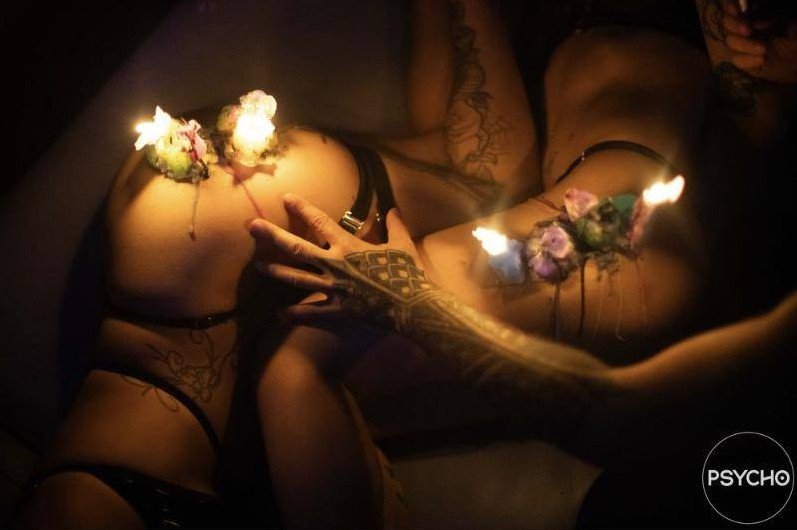
We often associate sacred sexuality with romantic love.
But does intimacy always require love?
Can a stranger make us feel profoundly seen? Can a consensual act of domination or submission become a meaningful ritual? Can an encounter without promises or expectations still leave us feeling deeply connected?
Audre Lorde, in Uses of the Erotic: The Erotic as Power, explored the erotic as a source of profound feeling, knowledge, and personal power.
Her perspective invites us to see eroticism as something greater than sexual performance.
A way of experiencing ourselves more fully.
And perhaps this is why even an unexpected encounter can sometimes touch something within us that feels almost spiritual.
The Sacred and the Wild
Sacred doesn’t necessarily mean gentle.
It doesn’t have to look like candles, soft music, or two lovers gazing into each other’s eyes.
It might emerge through intensity, vulnerability, ritual, surrender, or the conscious exchange of power.
A dominant and a submissive may experience a profound sense of connection through trust and negotiated boundaries.
Two people exploring their fantasies might discover a kind of intimacy that has nothing to do with conventional romance.
The sacred is not the opposite of the wild. Sometimes the wild is exactly where we discover it.
The Art of Being Fully There
Perhaps the deepest erotic experiences are not always the most physically intense.
Sometimes they’re the moments when we stop performing.
When we stop wondering how we look, whether we’re desirable enough, or what should happen next.
When we allow ourselves to feel without needing to prove anything.
Of course, not every sexual encounter needs to be profound or transformative. Pleasure can simply be pleasure, and that’s beautiful too.
But occasionally, something unexpected happens.
Time seems to slow down.
The distance between sensation and awareness disappears.
And for a moment, we’re not trying to become anything.
We’re simply there.
Maybe sacred eroticism isn’t about bringing spirituality into sexuality. It’s about recognizing how extraordinary sexuality can become when we’re truly present.
Have you ever experienced an erotic moment that felt almost sacred? Was it love, trust, surrender, or simply the intensity of being completely present?
The Seduction of the Forbidden
What turns you on that someone else might consider completely unacceptable?
Foot worship? Domination? Golden showers? Extreme BDSM? A fantasy you’ve never dared to share?
Or perhaps something that wouldn’t raise an eyebrow among your friends but could cause a scandal somewhere else.
What makes something taboo? The act itself, or the eyes of the person looking at it?
Your Taboo Might Be Someone Else’s Normal

Spend a night exploring Berlin’s sex-positive scene and you might discover that what seems shocking to some people is simply another expression of sexuality for others.
A man enjoying submission. A woman taking control. A couple exploring polyamory. People playing with gender, roles, and expectations.
For some, these experiences represent freedom or exploration. For others, they’re simply everyday life.
Bisexuality and queer identities aren’t inherently rebellious, just as polyamory isn’t necessarily an attempt to challenge society.
Sometimes people are simply living and loving in ways that feel natural to them.
Maybe taboo tells us more about the society judging a desire than about the desire itself.
How Far Does Desire Go?

Foot fetishism might seem unusual to one person and completely ordinary to another.
The same applies to golden showers, intense sadomasochistic play, humiliation fantasies, or elaborate role-playing.
Even within the kink community, people have very different limits.
What feels exciting to one person may be uncomfortable, uninteresting, or completely unimaginable to someone else.
And that’s where things become fascinating.
Why do certain boundaries awaken curiosity while others create rejection?
Is it our upbringing? Our experiences? Our imagination? The pleasure of exploring something unfamiliar?
Or does the possibility of crossing a boundary sometimes become part of the excitement itself?
The Forbidden Is Not Always the Fantasy
Georges Bataille explored the relationship between eroticism and transgression, suggesting that prohibition can give erotic experiences a particular intensity.
But there’s an interesting paradox.
If someone enjoys domination, does it become less exciting when they no longer feel ashamed of it?
If a fantasy becomes an accepted part of someone’s sexuality, does it lose its power?
Not necessarily.
Sometimes removing shame makes pleasure more intense, not less.
And sometimes what excites us isn’t breaking a rule at all.
It’s trust. Vulnerability. Power. Sensation. Curiosity. The freedom to explore without pretending to be someone else.
Who Draws the Line?
Perhaps the most interesting thing about taboos is how easily they move.
Between cultures. Between generations. Between communities. Even between two people sharing the same bed.
Of course, some boundaries are essential. Consent, safety, and respect are not obstacles to erotic freedom; they’re what make ethical exploration possible.
But beyond those boundaries, who gets to decide what is normal?
Perhaps erotic freedom isn’t about crossing every boundary. It’s about discovering which boundaries are truly ours and which ones we’ve simply inherited.
And maybe the most seductive thing of all isn’t the forbidden.
It’s being free enough to know what we desire without needing anyone else’s permission to feel it.
I’m curious: what’s something you once considered taboo that now feels completely natural to you? And do you think losing the taboo also means losing some of the excitement?
The Seduction of the City, the Seduction of Nature
The city seduces us with what we lack: the success we have yet to achieve, the encounter that has yet to happen, the person we might one day become.
Nature seduces us with what is already here: the body, the breath, the senses, the present moment.
The Seduction of Possibility
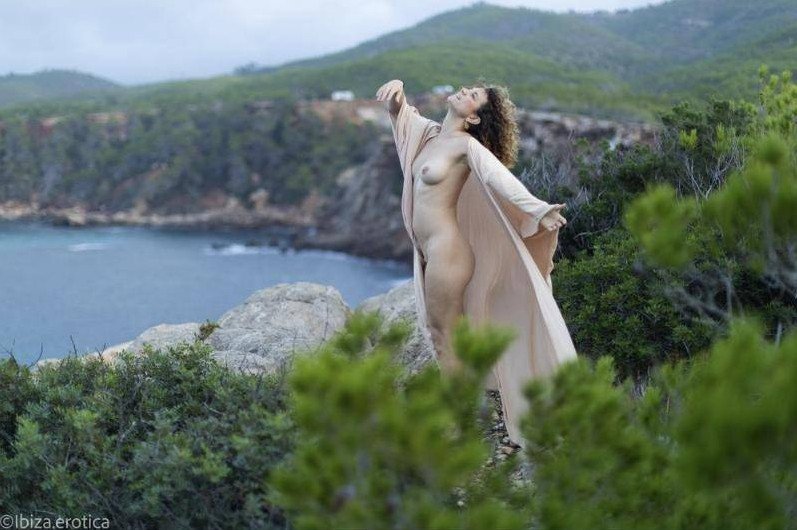
Every year, millions of people leave their villages and rural landscapes, drawn by the promise of a different life.
Money. Success. Recognition. Opportunity.
In The Metropolis and Mental Life (1903), Georg Simmel explored how cities offer freedom, individuality, and endless stimulation, but also competition and constant comparison.
This is the city’s first seduction: the infinity of possibility.
Every corner might conceal an unexpected encounter. Every stranger is a story that has yet to begin.
And then there is anonymity.
Far from the watchful eyes of a small town, where everyone knows who you are, the city offers the freedom to reinvent yourself.
It is no coincidence that many queer and kink communities have flourished in urban spaces. Among the crowds, people have found room to express identities and desires they once had to hide.
Sometimes, the most seductive thing about a city is not who you might meet, but who you might finally allow yourself to become.
The Seduction of Nature

Something different happens when we leave the city behind.
The noise fades. The horizon opens. Our attention returns to the wind, the ocean, the warmth of sunlight on our skin.
In Walden (1854), Henry David Thoreau questioned how much we truly need to live a meaningful life.
Rachel Carson, in The Sense of Wonder, celebrated our ability to experience nature through curiosity, sensitivity, and awe.
And Annie Sprinkle and Beth Stephens, in Assuming the Ecosexual Position, invite us to see the Earth not as a mother to take from, but as a lover to enter into a relationship with.
A relationship of sensuality, intimacy, reciprocity, and care.
Not simply taking pleasure from nature, but experiencing pleasure with it.
The Desire to Have, the Freedom to Be

Perhaps the deepest difference lies in how we experience time.
We often enter the city searching for something: money, success, recognition, pleasure, opportunity.
Always looking ahead. Always chasing the next achievement, the next encounter, the next experience.
And sometimes, what promises freedom becomes another form of captivity.
Nature invites us into a different dimension.
The warmth of sunlight on our skin. The sound of the ocean. The wind touching our bodies. The simple rhythm of breathing.
Nothing to achieve. Nothing to prove. Nowhere else to be.
The city seduces us with what we might have tomorrow. Nature seduces us with what we can feel today.
Perhaps true freedom is not about having more possibilities, but about being fully present in the one moment we actually have.
Because life is never experienced tomorrow. It is always happening now.
Philosophical & Literary References
- Georg Simmel — The Metropolis and Mental Life (1903). Urban life, individuality, and psychological stimulation.
- Henry David Thoreau — Walden (1854). Simplicity and deliberate living.
- Rachel Carson — The Sense of Wonder (1965). Nature, sensitivity, and the capacity for wonder.
- Annie Sprinkle & Beth Stephens — Assuming the Ecosexual Position: The Earth as Lover (2021). Ecosexuality, intimacy, reciprocity, and ecological care.
These reflections are inspired by the authors’ ideas rather than direct quotations.
Why Do Some Bodies Seduce Us More Than Others?
Perhaps because we are not simply attracted to bodies, but to what those bodies awaken within us.
Two people can have very similar physical features, yet one may leave us completely indifferent while the other awakens an almost uncontrollable desire.
Seduction emerges from the encounter between the body we perceive and our inner world.
Desire Is Not Entirely Rational

Our brains process attraction through a combination of sensory perceptions, past experiences, learned associations, emotions, and biological responses.
A scent, a voice, the way someone walks, the shape of their hands, or a particular facial expression can awaken something we cannot explain.
We don’t always choose what attracts us. Often, we only become aware of it after we have already felt it.
The Body as a Mirror of the Unconscious

Carl Gustav Jung offers an interesting perspective through the concept of projection.
Sometimes we attribute qualities, meanings, or fantasies to another person that also belong to our own inner world.
A body can become the canvas onto which we project a desire, a memory, or an unexplored part of ourselves.
This doesn’t mean that every attraction is an unconscious projection, but it suggests that we never perceive a body entirely neutrally.
Eroticism Is Not the Same as Beauty
This is where Anaïs Nin comes in.
In her erotic literature, desire is deeply connected to imagination, sensitivity, and subjectivity.
A body considered perfect by conventional beauty standards may leave us completely unmoved.
Another, imperfect by those same standards, may become irresistible.
Because beauty can be observed, while eroticism requires personal involvement.
We can recognize the beauty of a body without desiring it, and intensely desire a body without considering it perfect.
Seduction Is Also Movement
A body is not merely a shape.
It is the way someone inhabits that shape.
The naturalness of a gesture, the intensity of a gaze, the rhythm of breathing, the freedom with which someone moves can completely transform our perception.
Sometimes a photograph leaves us indifferent, but meeting that same person awakens an extraordinary attraction.
The body hasn’t changed. Our experience of that body has.
The Mystery of Desire
In Erotism, philosopher Georges Bataille explores desire as an experience capable of challenging the familiar boundaries of our individuality.
Eroticism is not only about what we see, but also about what we imagine, what we fear, and what we are willing to discover.
Sometimes a body seduces us precisely because it represents something we have yet to understand.
Not necessarily a person to possess, but an experience toward which we feel a mysterious openness.
And this brings us to a fascinating question:
If seduction emerges from the encounter between another person’s body and our inner universe, how much of our desire truly belongs to the person we desire, and how much belongs to ourselves?
Perhaps we don’t desire bodies simply for what they are, but for what they awaken within us.
Philosophical & Literary References
- Carl Gustav Jung — Psychological projection and the unconscious.
- Anaïs Nin — Erotic literature, imagination, and the subjective experience of desire.
- Georges Bataille — Erotism: Death and Sensuality (1957). Eroticism, desire, and the boundaries of individuality.
These reflections are interpretations inspired by the authors’ ideas, rather than direct quotations.
The Art of Being Seductive
“Seduction is not about making someone desire you. It’s about becoming so deeply connected to yourself that desire arises naturally.”
We often think of seduction as something we do.
A particular look. A carefully chosen word. A movement of the body. The art of creating mystery, awakening curiosity, or provoking desire.
But what if the most powerful form of seduction requires no strategy at all?
What if being seductive has less to do with attracting others and more to do with how deeply we inhabit ourselves?
The Difference Between Seduction and Performance

We all wear masks.
We adapt our personalities, our gestures, even our desires, depending on who is watching.
Carl Gustav Jung explored this through the concept of the persona, the social mask we develop to navigate the world.
The problem begins when we become so identified with that mask that we lose contact with the person beneath it.
Seduction can become another performance: an attempt to appear mysterious, desirable, confident, or sexually irresistible.
But there is a profound difference between performing sensuality and experiencing it.
One seeks validation. The other expresses aliveness.
Perhaps genuine seduction begins when we no longer need to convince anyone of our desirability.
The Erotic Power of Being Fully Alive

In her essay Uses of the Erotic: The Erotic as Power, Audre Lorde describes the erotic as something far deeper than sexual attraction.
For Lorde, the erotic is an inner source of power, rooted in our capacity to feel deeply and experience life with intensity.
It exists not only in sexuality but also in creativity, joy, connection, and the relationship we cultivate with ourselves.
This offers a beautiful way to reconsider seduction.
A person completely absorbed in dancing, creating art, swimming in the ocean, or simply enjoying the sensation of sunlight on their skin can radiate an extraordinary sensuality.
Not because they are trying to attract attention.
But because they are fully experiencing life.
Perhaps sensuality becomes magnetic when it stops being a performance and becomes a way of living.
The Seduction of Being Yourself
For Anaïs Nin, eroticism was deeply connected to imagination, self-discovery, and the courage to explore our inner world.
Through her diaries and erotic writing, she revealed how sensuality can emerge from our contradictions, vulnerabilities, fantasies, and hidden desires.
Her work invites us to consider seduction not as the construction of an attractive image, but as the revelation of a complex and authentic self.
Perhaps what makes someone truly seductive is not perfection, confidence, or beauty, but the freedom to embrace every dimension of who they are.
We become magnetic not by creating a more desirable version of ourselves, but by allowing more of ourselves to exist.
From Needing Love to Becoming Love
In The Art of Loving, Erich Fromm challenges the idea that love is primarily about finding the right person.
For Fromm, loving is a capacity that must be cultivated through awareness, care, respect, and self-knowledge.
His philosophy suggests an important distinction between needing someone to make us feel complete and approaching another person from a place of inner richness.
Applied to seduction, this changes everything.
Instead of asking:
How can I make this person desire me?
We might begin asking:
How deeply can I connect with myself, with this moment, and with the person in front of me?
The intention shifts from obtaining something to experiencing something.
From performance to presence.
From insecurity to curiosity.
From possession to connection.
The Paradox of Natural Seduction
There is, however, a beautiful paradox.
The moment we try to become naturally seductive, we risk turning authenticity into another strategy.
We meditate to appear peaceful. We cultivate confidence to become attractive. We practice presence because we hope someone will notice.
But can authenticity still be authentic when it becomes a means of seduction?
Perhaps genuine seduction begins when we stop searching for an effect.
When we enjoy our bodies without needing admiration, express desire without demanding reciprocity, and allow ourselves to be seen without constructing an identity designed to be desired.
The deepest freedom is not becoming irresistible to others, but feeling fully alive without needing to be desired.
Seduction begins where the need to seduce ends.
Philosophical & Literary References
- Carl Gustav Jung — Two Essays on Analytical Psychology. The persona and our social masks.
- Audre Lorde — Uses of the Erotic: The Erotic as Power (1978). The erotic as a source of inner power and authentic feeling.
- Anaïs Nin — The Diary of Anaïs Nin and Delta of Venus. Eroticism, imagination, sensuality, and self-discovery.
- Erich Fromm — The Art of Loving (1956). Love as a capacity developed through awareness and self-knowledge.
These reflections are inspired by the authors’ ideas rather than direct quotations.
The Philosophy of Desire
We spend much of our lives desiring.
A person. A touch. A kiss that hasn’t happened yet. A body we haven’t explored. An experience we imagine might finally make us feel complete.
But what is desire, really?
Does it arise from something missing within us, or is it an expression of the life already flowing through us?
Desire as a Sense of Lack
For Plato, desire is deeply connected to the feeling that something is missing.
In The Symposium, through the words of Socrates and the teachings of Diotima, a female figure who introduces Socrates to the mysteries of love, desire emerges from the tension between what we possess and what we long for.
We desire beauty, connection, immortality, perhaps even transcendence.
But this raises an uncomfortable question:
If desire is always directed toward something we lack, can it ever truly satisfy us?
The moment we obtain what we desire, the mind often begins searching for something else.
A new lover. A new sensation. A new fantasy.
The search can become endless.
Desire as a Celebration of Existence
Spinoza offers a radically different perspective.
In his Ethics, he writes:
“Desire is the very essence of man.” — Baruch Spinoza, Ethics, Part III, Definition of the Emotions I.
For Spinoza, desire is not simply a sign that something is missing. It is the expression of our fundamental drive to exist, act, and persevere.
From this perspective, desire does not necessarily need to be extinguished.
It can be understood, cultivated, and consciously directed.
Perhaps the question is not how to stop desiring, but how to desire without becoming enslaved by desire.
Desire as Freedom
The philosopher and writer Simone de Beauvoir introduces another fundamental dimension: the freedom of the other.
In her philosophy, authentic love should not become possession or dependence, but should recognize two individuals as free beings.
In The Second Sex, she writes:
“Authentic love must be founded on the reciprocal recognition of two freedoms.” — Simone de Beauvoir, The Second Sex (1949).
This perspective radically transforms the meaning of seduction.
It is no longer about conquering, holding on to, or possessing someone, but about creating a space where two free individuals can meet without losing themselves.
Perhaps the deepest form of seduction is to desire someone without wanting to limit their freedom.
The Erotic Paradox
Imagine caressing someone’s skin without needing that moment to lead anywhere.
No expectations. No destination. No need to possess.
Only the warmth of another body, the rhythm of breathing, the electricity of mutual presence.
Can desire exist without the urgency to satisfy it?
Can we experience intense erotic attraction without turning another person into something to obtain?
Perhaps this is one of the most fascinating possibilities of conscious eroticism:
To desire fully, without the need to possess.
Perhaps the deepest transformation of desire begins when we stop treating it as a problem to solve and start experiencing it as something worth understanding.
Desire does not always ask to be fulfilled. Sometimes, it simply asks to be felt.
Inspired by Plato’s Symposium, Baruch Spinoza’s Ethics, and Simone de Beauvoir’s The Second Sex.