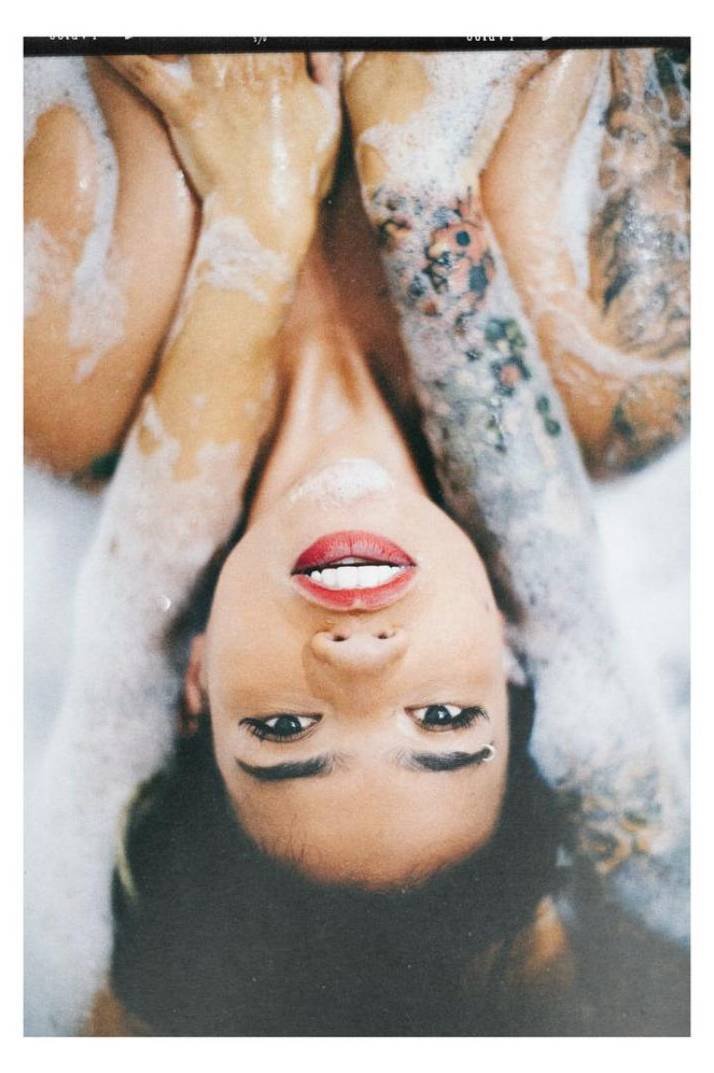
The Art of Being Seductive
When seduction becomes a natural expression of who we are.
“Seduction is not about making someone desire you. It’s about becoming so deeply connected to yourself that desire arises naturally.”
We often think of seduction as something we do.
A particular look. A carefully chosen word. A movement of the body. The art of creating mystery, awakening curiosity, or provoking desire.
But what if the most powerful form of seduction requires no strategy at all?
What if being seductive has less to do with attracting others and more to do with how deeply we inhabit ourselves?

The Difference Between Seduction and Performance
We all wear masks.
We adapt our personalities, our gestures, even our desires, depending on who is watching.
Carl Gustav Jung explored this through the concept of the persona, the social mask we develop to navigate the world.
The problem begins when we become so identified with that mask that we lose contact with the person beneath it.
Seduction can become another performance: an attempt to appear mysterious, desirable, confident, or sexually irresistible.
But there is a profound difference between performing sensuality and experiencing it.
One seeks validation. The other expresses aliveness.
Perhaps genuine seduction begins when we no longer need to convince anyone of our desirability.

The Erotic Power of Being Fully Alive
In her essay Uses of the Erotic: The Erotic as Power, Audre Lorde describes the erotic as something far deeper than sexual attraction.
For Lorde, the erotic is an inner source of power, rooted in our capacity to feel deeply and experience life with intensity.
It exists not only in sexuality but also in creativity, joy, connection, and the relationship we cultivate with ourselves.
This offers a beautiful way to reconsider seduction.
A person completely absorbed in dancing, creating art, swimming in the ocean, or simply enjoying the sensation of sunlight on their skin can radiate an extraordinary sensuality.
Not because they are trying to attract attention.
But because they are fully experiencing life.
Perhaps sensuality becomes magnetic when it stops being a performance and becomes a way of living.
The Seduction of Being Yourself
For Anaïs Nin, eroticism was deeply connected to imagination, self-discovery, and the courage to explore our inner world.
Through her diaries and erotic writing, she revealed how sensuality can emerge from our contradictions, vulnerabilities, fantasies, and hidden desires.
Her work invites us to consider seduction not as the construction of an attractive image, but as the revelation of a complex and authentic self.
Perhaps what makes someone truly seductive is not perfection, confidence, or beauty, but the freedom to embrace every dimension of who they are.
We become magnetic not by creating a more desirable version of ourselves, but by allowing more of ourselves to exist.
From Needing Love to Becoming Love
In The Art of Loving, Erich Fromm challenges the idea that love is primarily about finding the right person.
For Fromm, loving is a capacity that must be cultivated through awareness, care, respect, and self-knowledge.
His philosophy suggests an important distinction between needing someone to make us feel complete and approaching another person from a place of inner richness.
Applied to seduction, this changes everything.
Instead of asking:
How can I make this person desire me?
We might begin asking:
How deeply can I connect with myself, with this moment, and with the person in front of me?
The intention shifts from obtaining something to experiencing something.
From performance to presence.
From insecurity to curiosity.
From possession to connection.
The Paradox of Natural Seduction
There is, however, a beautiful paradox.
The moment we try to become naturally seductive, we risk turning authenticity into another strategy.
We meditate to appear peaceful. We cultivate confidence to become attractive. We practice presence because we hope someone will notice.
But can authenticity still be authentic when it becomes a means of seduction?
Perhaps genuine seduction begins when we stop searching for an effect.
When we enjoy our bodies without needing admiration, express desire without demanding reciprocity, and allow ourselves to be seen without constructing an identity designed to be desired.
The deepest freedom is not becoming irresistible to others, but feeling fully alive without needing to be desired.
Seduction begins where the need to seduce ends.
Philosophical & Literary References
- Carl Gustav Jung — Two Essays on Analytical Psychology. The persona and our social masks.
- Audre Lorde — Uses of the Erotic: The Erotic as Power (1978). The erotic as a source of inner power and authentic feeling.
- Anaïs Nin — The Diary of Anaïs Nin and Delta of Venus. Eroticism, imagination, sensuality, and self-discovery.
- Erich Fromm — The Art of Loving (1956). Love as a capacity developed through awareness and self-knowledge.
These reflections are inspired by the authors’ ideas rather than direct quotations.
