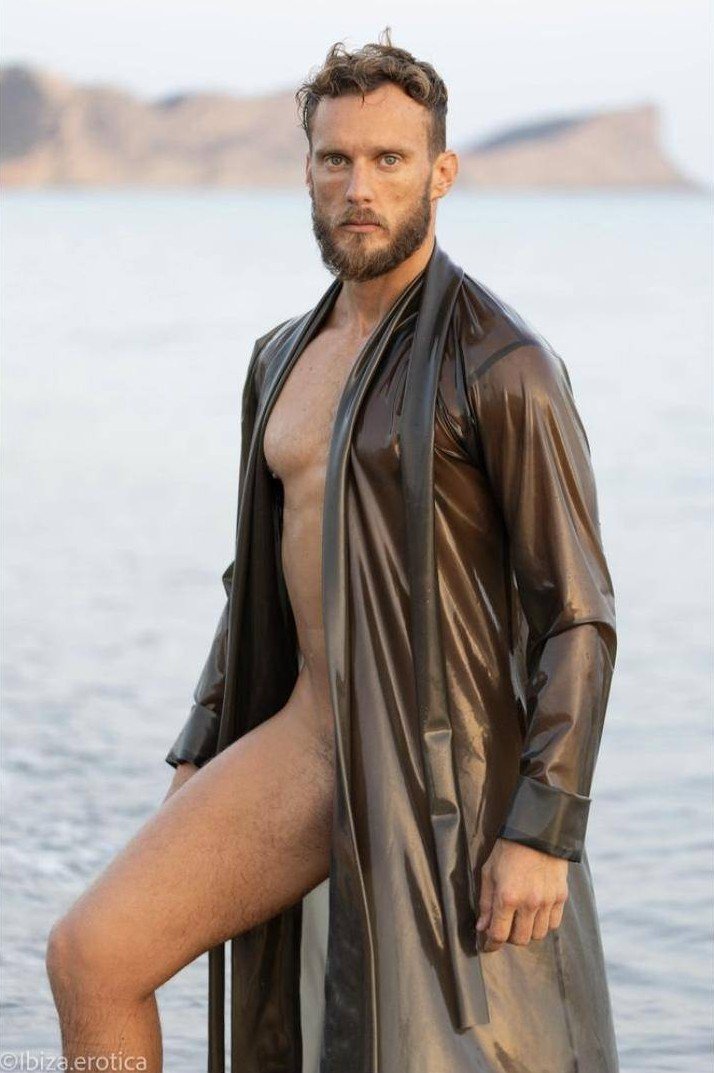
Why are straight cis men perceived as the enemy?
Between responsibility, privilege and prejudice.
Even before publishing this article, the question itself sparked opposing reactions in the comments on my FetLife poll.
Some argued that it was unfair to generalise, expressing their love for straight cis men and pointing out that there are many wonderful men out there. Others responded with anger, linking the question to patriarchal power, violence and the abuse of power. Someone even suggested that the title itself was contributing to further division.
And that is precisely where I want to begin.
In a community dedicated to sexual freedom, the exploration of desire and the culture of consent, a significant proportion of unwanted interactions seem, in my experience, to come from straight cis men.
Unsolicited genital pictures, sexually explicit messages, persistent advances and difficulty accepting rejection.
The freedom to express one’s sexuality is sometimes confused with the right to impose it on others.
But where does this attitude come from?

In Masculinities, sociologist Raewyn Connell explores the concept of hegemonic masculinity, a cultural model that legitimises certain gender hierarchies. Meanwhile, bell hooks, in The Will to Change, examines how patriarchal culture can also restrict men’s emotional freedom and their ability to acknowledge their own vulnerability.
Perhaps many men have learned how to express their desire without truly learning how to relate to the desires of others.
The distrust directed towards them does not necessarily arise out of nowhere. It can be the result of repeated experiences and represent an understandable form of self-protection.
In The Cultural Politics of Emotion, Sara Ahmed explores how emotions circulate socially, shaping collective identities and establishing boundaries between groups.
But what happens when distrust towards certain behaviours becomes a preconceived judgement about someone’s identity?
The question, then, is not whether straight cis men are the enemy, but how the figure of the enemy is constructed.

We must distinguish responsibility from guilt, privilege from individual behaviour, and criticism of patriarchy from hostility towards men themselves.
Acknowledging one’s privilege does not mean accepting guilt simply for who one is. It means becoming aware of the cultural structures within which one has been shaped and taking responsibility for one’s actions.
At the same time, no one should feel obliged to abandon their personal boundaries in order to demonstrate their inclusivity.
In The Ethics of Ambiguity, Simone de Beauvoir develops a philosophical perspective in which our own freedom is deeply intertwined with the recognition of the freedom of others.
Perhaps a new form of male erotic emancipation begins precisely here: with the ability to desire without entitlement, to express oneself without imposing, and to accept rejection without experiencing it as a diminishment of one’s own worth.
Sexual liberation is not merely the freedom to express our desires, but also the respect for another person’s freedom not to share them.
Can we hold men accountable without turning their identity into a fault? And can we truly dismantle prejudice by creating new forms of it?
